Desire
What do you want before the room teaches you to apologize for naming it?
Promise World presents
A Novel
How Faith, Fortune, and the Right Deal Can Make Any Man Chosen
Reverend Beau Promise built a church, a broadcast empire, a family institution, and a national movement from an abandoned tire shop. Now he tells the story in the only voice he fully trusts: his own.
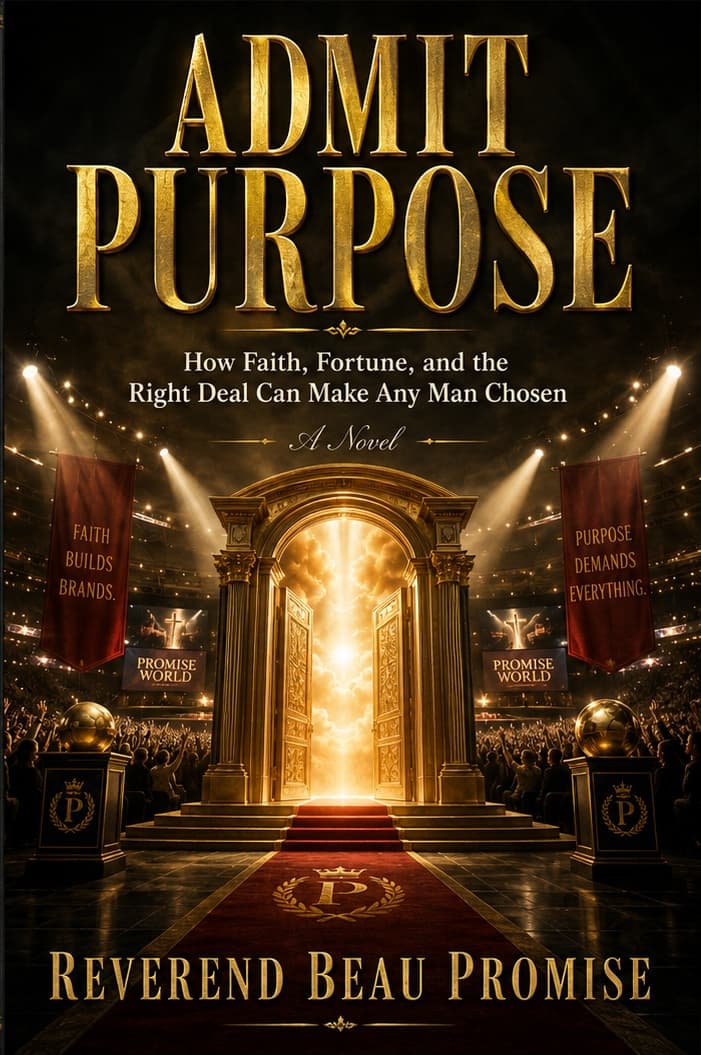
A man should admit what he wants. Then he should admit what he called it. Then he should admit what it cost.
A founder’s testimony becomes a family record, a national movement, and an account of what faith can build when desire is finally named.
Discover the novelThe official book trailer
Watch the cinematic path from the tire shop to the arena, then follow the message into the rooms that opened after the first crowd went home.
Official book trailer
The official origin
The first sanctuary smelled of rubber and oil. The restroom had a flowered curtain. The first person served arrived holding a tire iron and did not know the church was open.
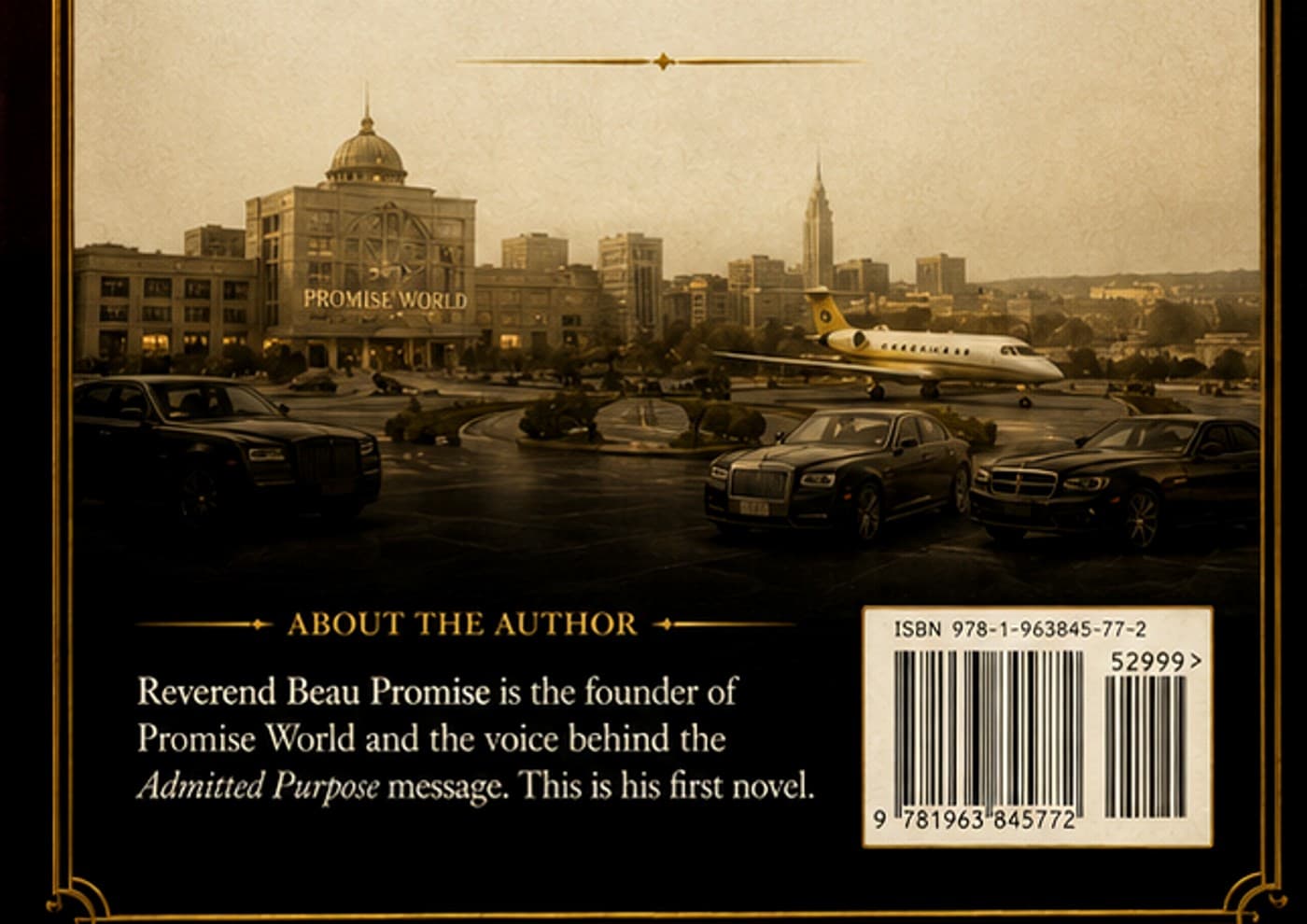
An abandoned tire shop beside a county road, leased for one hundred and fifty dollars a month.
Thirty-six borrowed from a funeral home. Six red chairs from a bingo hall.
Earl Benton arrived with a failing tire and became part of the service before he became part of the church.
Ninety-eight dollars and forty-two cents available. Twenty dollars left the room with Mrs. Frazier.
Four refusals, one approval, and a future everyone else was still measuring as a tire shop.
The roof leaked. White buckets stayed outside the frame. The message traveled.
A church became a school, a network, a foundation, a national pledge, and an institution that no longer needed its founder.
Promise World did not begin with resources. It began with recognition.
Read the complete origin storyThe doctrine
What do you want before the room teaches you to apologize for naming it?
A leader names what other people have not yet learned to see.
A movement becomes real when people remain after the first cost arrives.
Resistance is often the first public evidence that a message has reached the structures built to contain it.
Admission begins when a person names the desire clearly and accepts the discipline required to carry it.
The Promise family
Yellow legal pad
She preserved the names, figures, and decisions that carried Promise World through its first rooms.
Spreadsheet and empty chair
He brought measurement, operations, and durable stewardship to an expanding national institution.
Food box and unsigned shirt
He kept Promise World close to the immediate needs that first opened its doors.
Two telephones and a gold card
She carried the Promise World message into a durable national structure built for the next generation.
The Promise World archive
$150 underlined twice
One loose speaker wire
One name in the final field
The first number in a national system
What happens if my purpose says no?
Authority placed into another hand
Rent: $150
Electricity: $23
Chair rental: $18
First offering available: $98.42
Groceries for Mrs. Frazier: $20
Remaining before Monday: $78.42
Reading groups and classrooms
Explore the character map, institutional timeline, discussion questions, and the worksheet that follows every Promise World decision from the person who wanted it to the person who carried its cost.
Reading the Institution
Reading the Institution 01
Why the same gifts that create an institution can make ordinary oversight feel like betrayal once the institution grows beyond the founder's personal judgment.
Read the essayReading the Institution 04
How a short voluntary pledge travels from an arena into churches, workplaces, classrooms, elections, and personnel decisions.
Read the essayReading the Institution 08
How ordinary forms, eligibility rules, restricted accounts, alignment guidance, and camera decisions carry harm after the moral sentence has left the room.
Read the essayWhat Comes After Purpose?
A quieter room for the question Beau cannot stop turning into an opening: what remains after the institution continues without the man who named it?
“I told myself it was not a movement. It was a conversation.”Enter the next room
The word is not the proof. The crowd is not the proof.